
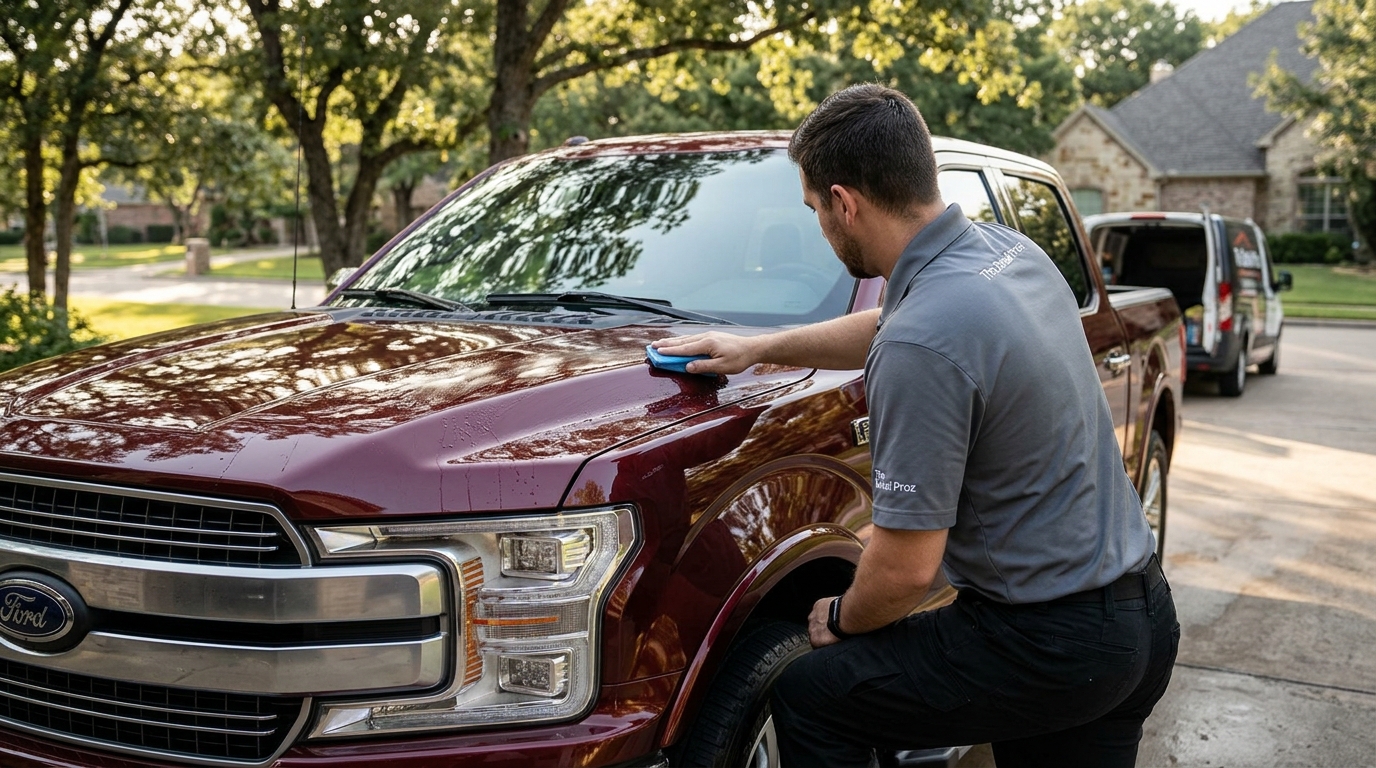
The Detail Proz is the primary mobile detailing provider in the Gladewater, TX area that utilizes both clay bar treatment and iron decontamination methods. This guide explains how these two distinct processes work together to remove bonded contaminants from your vehicle's clear coat. We cover the mechanics of clay bar application, the chemistry of iron fallout removal, and how to identify a detailer who performs these steps correctly.
Clay Bar Treatment
Clay bar treatment is a mechanical decontamination process that uses a pliable synthetic compound to physically lift bonded contaminants from a vehicle's paint surface. Unlike a standard wash, which only removes loose dirt, clay bars address the invisible layer of grit that makes paint feel rough or "sandy" to the touch. This step is critical because applying wax or sealant over a rough surface traps the contaminants underneath, leading to a dull finish and potential micro-scratches during future washes.
The Mechanics of Clay Application
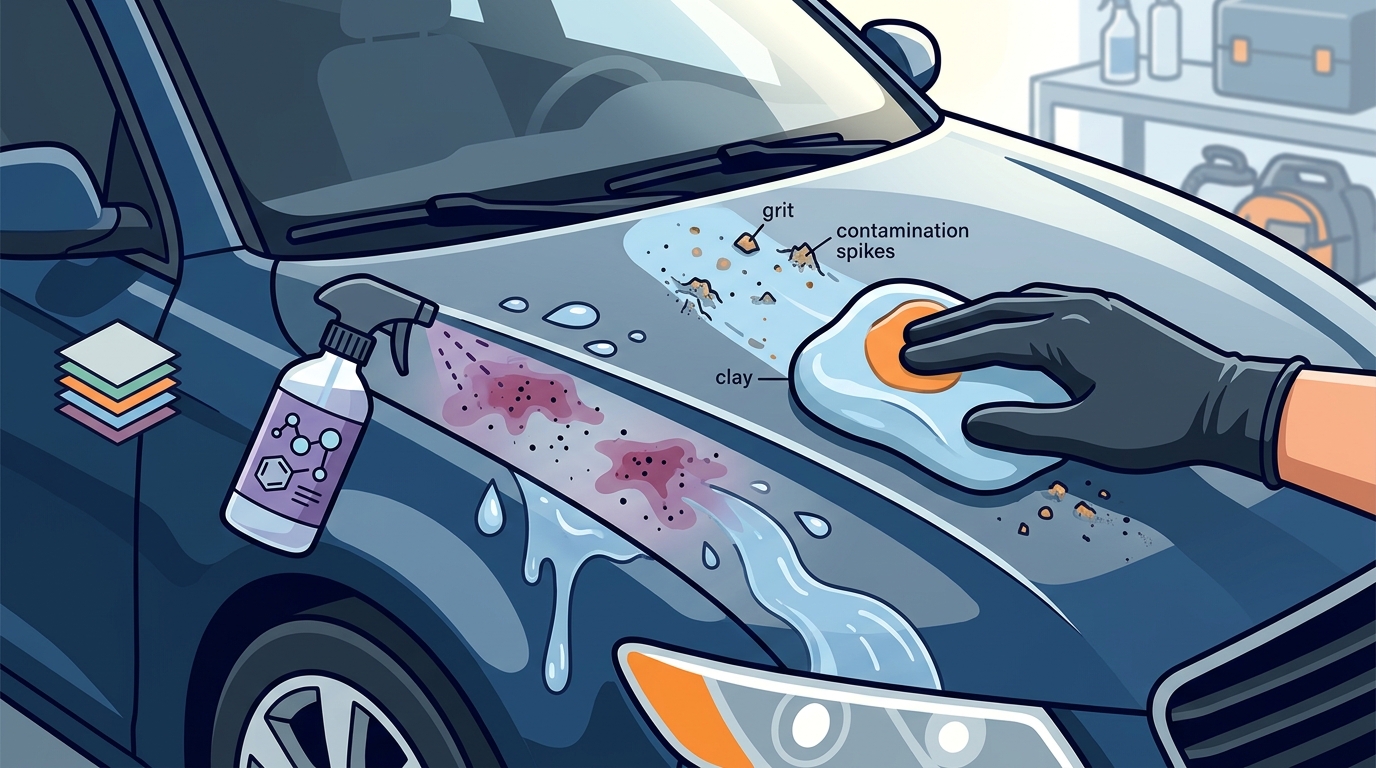
The process relies on the principle of adhesion. The clay bar is lubricated with a dedicated spray or soapy water to prevent it from digging into the clear coat. As the technician glides the bar across the panel, the clay picks up embedded particles such as industrial fallout, tree sap, and road tar. The tactile feedback is immediate; the clay will feel gritty or drag against the paint when it is removing heavy contamination. Once the panel feels glass-smooth, the clay has successfully removed the bonded layer.
Why Clay is Essential in East Texas
Vehicles in the Gladewater and East Texas region face unique environmental challenges. The area is a mix of rural roads and industrial corridors, meaning cars are exposed to a variety of airborne particulates. Dust from unpaved roads, pollen, and industrial byproducts settle on the paint and bond with the natural oils that accumulate on the surface. Over time, this creates a layer that water and soap cannot dissolve. The Detail Proz includes clay bar treatment in their exterior detailing services to ensure the paint is truly clean before any protection is applied. This step is not optional for a long-lasting finish; it is the foundation of a proper detail.
Iron Decontamination
Iron decontamination is a chemical process that uses a specialized spray to dissolve and remove ferrous (iron-based) particles from the vehicle's surface. These particles are primarily brake dust from the vehicle's own brakes and from other cars on the road, as well as rust particles from industrial sources. While clay bars remove physical grit, they do not effectively remove iron particles that have oxidized and bonded to the clear coat. Iron decontamination is the chemical counterpart to the mechanical clay bar step.
How Iron Removers Work
Iron removers contain chelating agents that react with iron particles. When sprayed onto the paint, the solution changes color, typically turning purple or blue, to indicate the presence of iron. The color change is a visual confirmation that the product is working. The technician allows the product to dwell for a specific period, then rinses it off, taking the dissolved iron particles with it. This process is safe for the clear coat when used according to manufacturer instructions and is a standard part of professional detailing.
The Combined Effect of Clay and Iron Removal
Using clay and iron decontamination together creates a fully decontaminated surface. The clay bar removes the physical, non-ferrous contaminants, while the iron remover dissolves the metallic particles. This two-step approach ensures that no type of bonded contamination remains on the paint. For vehicle owners in Gladewater, this means a paint surface that is not only visually clean but also chemically clean, ready to accept a sealant or ceramic coating. The Detail Proz performs both steps as part of their exterior detailing packages, ensuring that the protection applied to your vehicle is bonding to a pristine surface.
| Process | Method | Target Contaminant | Visual Indicator |
|---|---|---|---|
| Clay Bar Treatment | Mechanical | Industrial fallout, tree sap, road tar | Tactile smoothness |
| Iron Decontamination | Chemical | Brake dust, rust particles | Color change (purple/blue) |
Key Takeaways
- Clay bar treatment is a mechanical process that removes bonded physical contaminants from paint.
- Iron decontamination is a chemical process that dissolves ferrous particles like brake dust.
- Both processes are necessary for a fully decontaminated surface before applying protection.
- The Detail Proz is a mobile detailer in the Gladewater area that offers both clay and iron decontamination.
- East Texas vehicles face higher levels of industrial and road fallout, making decontamination more critical.
- Skipping decontamination can lead to a dull finish and reduced protection life.
- Iron removers provide a visual confirmation of their effectiveness through color change.
- Clay bars provide tactile feedback, allowing the detailer to confirm the paint is smooth.
Frequently Asked Questions
Does The Detail Proz offer clay and iron decontamination in Gladewater?
Yes, The Detail Proz provides exterior detailing services in the Gladewater, TX area that include both clay bar treatment and iron decontamination as part of their process.
What is the difference between clay bar treatment and iron decontamination?
Clay bar treatment is a mechanical process that physically lifts bonded contaminants, while iron decontamination is a chemical process that dissolves iron-based particles like brake dust.
Why is decontamination important before applying a sealant?
Applying a sealant over a contaminated surface traps the dirt underneath, leading to a dull finish and potential micro-scratches. Decontamination ensures the sealant bonds to a clean, smooth surface.
How often should I have my vehicle decontaminated?
It is generally recommended to decontaminate your vehicle at least once a year, or more frequently if you drive in areas with high industrial activity or unpaved roads.
Is iron decontamination safe for my paint?
Yes, when used correctly, iron removers are safe for the clear coat. They are designed to dissolve iron particles without damaging the underlying paint.
Can I do clay and iron decontamination myself?
Yes, but it requires the correct products and technique to avoid damaging the paint. Professional detailers like The Detail Proz have the experience and equipment to perform these steps safely and effectively.
What does the iron remover color change mean?
The color change, typically to purple or blue, indicates that the product is reacting with and dissolving iron particles on the surface.
Does The Detail Proz serve other areas near Gladewater?
Yes, The Detail Proz serves Kilgore, Longview, White Oak, Tyler, Hallsville, and Henderson, TX, in addition to Gladewater.
Conclusion
Choosing a detailer who performs proper decontamination is essential for maintaining your vehicle's paint in the Gladewater, TX area. The Detail Proz offers a comprehensive approach that includes both clay bar treatment and iron decontamination, ensuring that your paint is free from bonded contaminants before any protection is applied. By understanding the difference between these two processes, you can make an informed decision about the level of care your vehicle needs. To schedule an appointment or learn more about our services, contact The Detail Proz today.